Notes on Developing Robot Moments

Atualizado: 5 de mai.
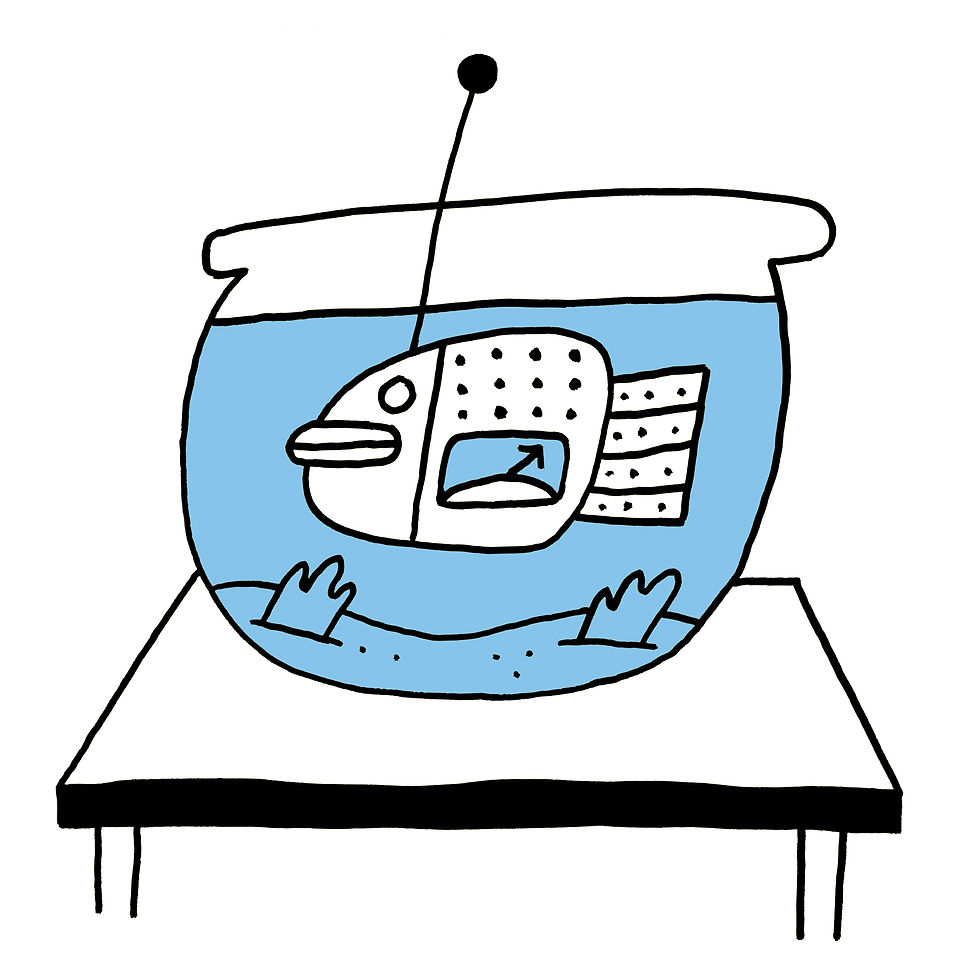
This series of spot illustrations explores subtle, playful encounters with robots.
Each piece captures a fleeting moment of curiosity or quiet humor, inviting the viewer to step into a small imagined world full of personality.
The drawings were created entirely by hand on paper using black Posca markers, preserving the spontaneity and rhythm of the line.
The palette is minimal, using white, black, and selective touches of blue to highlight key details.
Each illustration was carefully digitized and refined in Photoshop, balancing the energy of hand-drawn work with the clarity and precision of digital color.


Thumbnail sketches are one of the most important tools in professional illustration, especially when developing spot illustrations and visual series. They allow you to think quickly, explore ideas freely, and solve composition problems before investing time in final artwork.
The purpose of a thumbnail sketch is not to create a beautiful drawing. It is not meant to be polished, detailed, or finished. A thumbnail exists to capture an idea as fast as possible. Speed matters. The faster you can put ideas on paper, the more creative options you give yourself.
Many young illustrators spend too much time trying to make their thumbnails look impressive, but that completely defeats their purpose. A good thumbnail can be messy, loose, awkward, and unfinished as long as the visual idea is clear. What matters is readability, composition, movement, and storytelling.
For spot illustrations, this stage is especially important because the image needs to communicate immediately at a small size. Thumbnail sketches help test silhouettes, focal points, negative space, and visual hierarchy long before the final rendering begins.
Working in a series makes thumbnail sketching even more valuable. When multiple thumbnails are placed side by side, you can read the entire series more clearly and evaluate how the images interact with each other. You begin to notice repetition, pacing, contrast, rhythm, and balance across the collection as a whole.
This broader view is difficult to achieve when jumping directly into finished illustrations one at a time. Thumbnail sketches allow you to build visual consistency while still keeping each image fresh and distinct.
Most professional illustrators rely heavily on this process. Even after years of experience, thumbnail sketching remains one of the fastest and most effective ways to generate stronger ideas and improve visual decision making. In many cases, the success of the final illustration is already determined at the thumbnail stage.




Comentários